


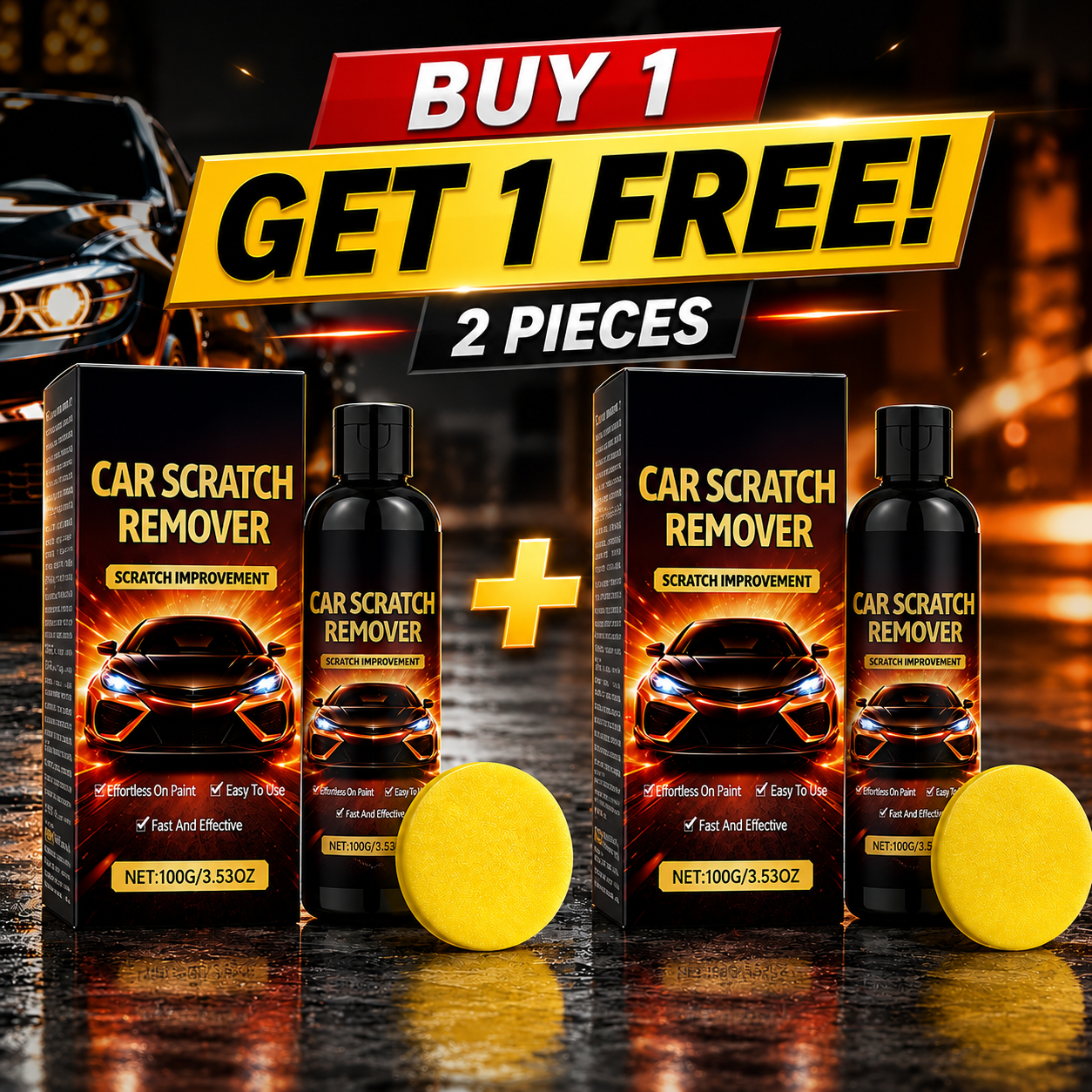
A fresh scratch on your car's paintwork — and the garage bill looms large.
A careless moment in a car park, a scraping branch or an unexplained scuff on the door — and suddenly your car looks well past its best. This professional car scratch repair kit uses a micro-polishing compound to remove surface scratches and swirl marks from your paintwork, leaving a smooth, glossy finish you can achieve from your own driveway. No booking fees, no waiting days for an appointment — just results in minutes.

Benefits
- No more expensive garage bills: Surface scratches and swirl marks disappear in a matter of minutes, so you never have to pay for a professional repair visit or wait days to get your car back.
- One step is all it takes: Apply, work in and wipe off — no complicated preparation, no multi-stage process, no hunting around for additional products.
- No more worrying about damaging the clear coat: The formula is precisely calibrated so the delicate clear coat stays completely untouched, meaning you never have to hesitate before applying it across a larger area.
Specifications
- Dimensions: 5.8 cm x 12.8 cm
- Contents: 100 g per unit
- Ingredients: Water, aluminium oxide, silicone polymer, carboxymethylcellulose, 1,2-hexanediol, EDTA-2Na
- Pack contents: 2 x scratch repair compound, 2 x applicator sponge

How to Use
- Prepare: Clean and dry the affected area thoroughly so no dirt gets worked into the paint.
- Apply: Put a small amount of compound onto the applicator sponge and work it gently into the scratch using circular motions.
- Wipe and inspect: Remove any residue with a clean cloth and check the result in good light — repeat once for deeper scratches.
Pro Tip: Always test on a small, inconspicuous area first — especially on older paintwork or resprayed panels, as different lacquers can react differently to polishing compounds.